 ×
×


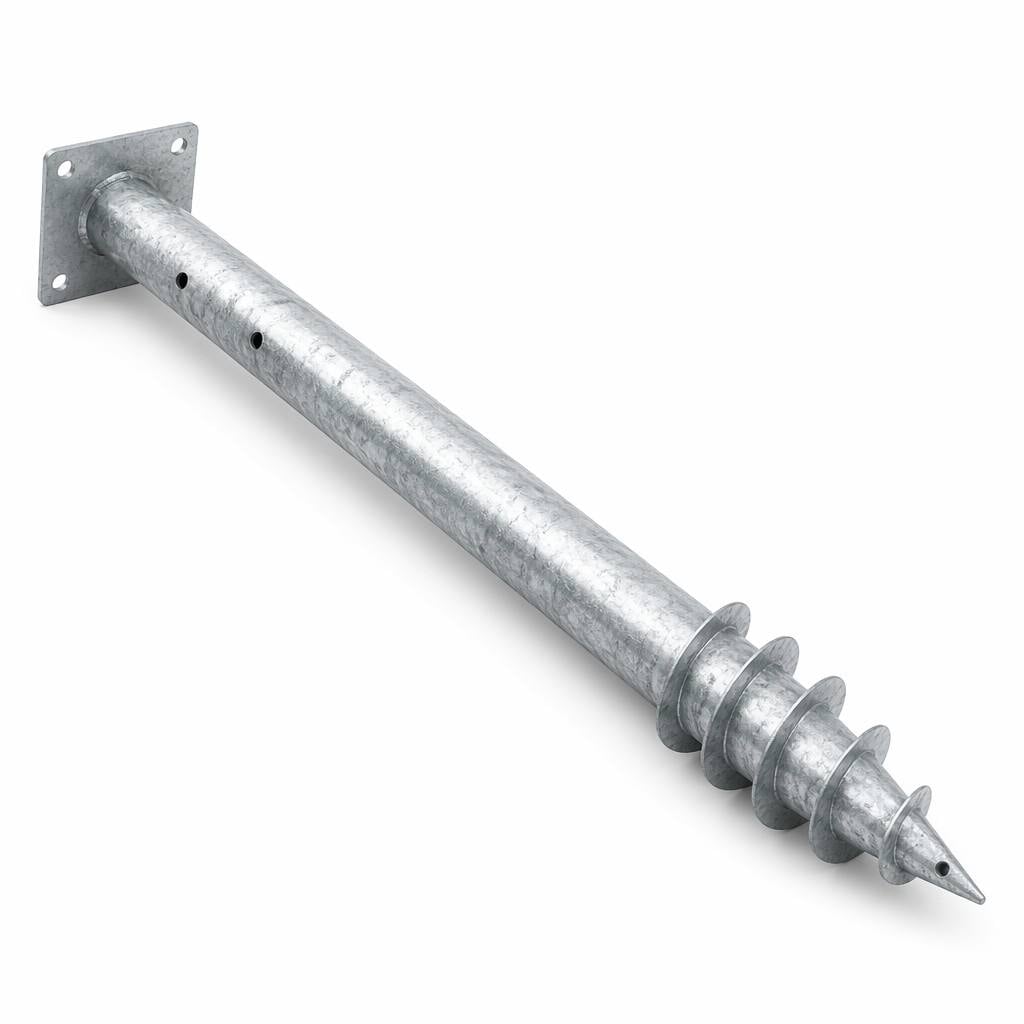
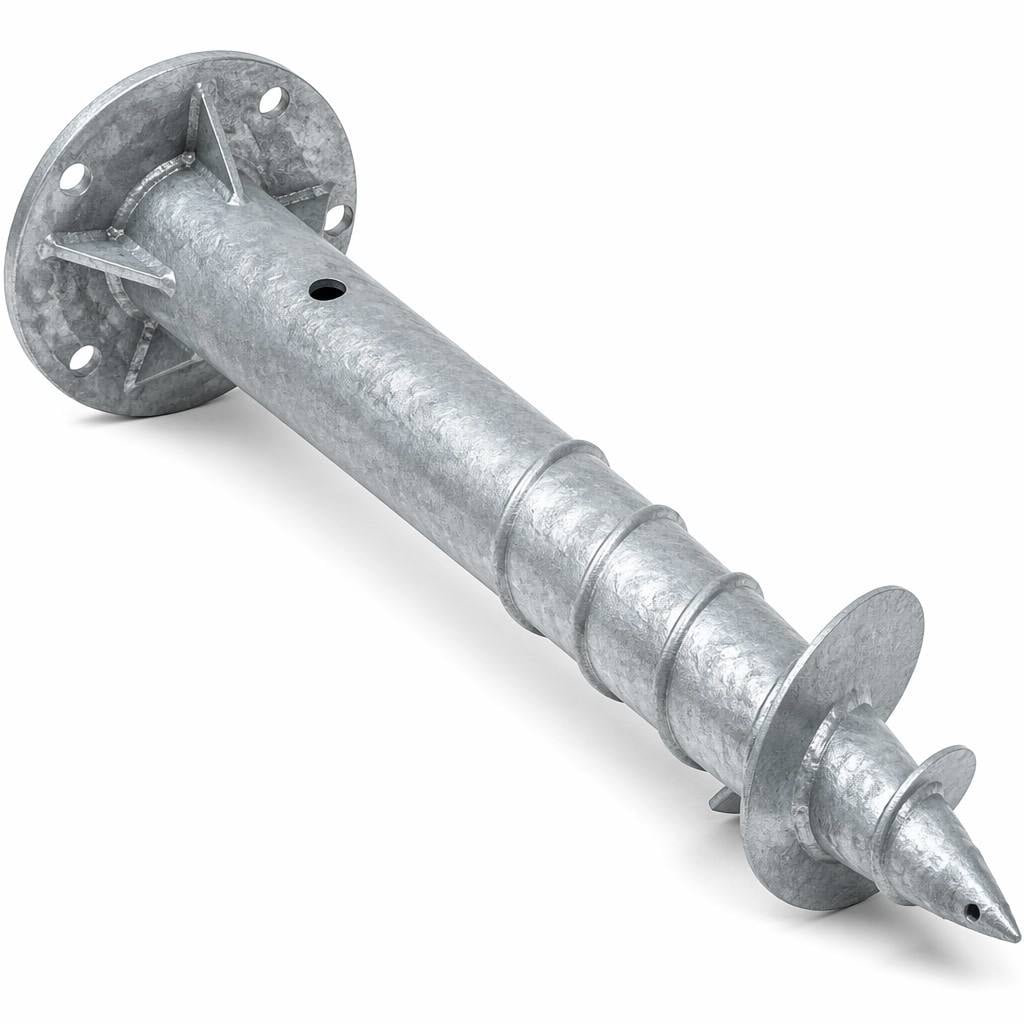
Ø76mm HDG Ground Screw Foundation System | No-Concrete Solar Pile | Fast-Install Helical Anchor for Ground-Mount PV Projects
Concrete foundations are the single largest source of schedule delay and cost overrun in ground-mount solar construction. They require formwork, rebar, concrete delivery, pouring, and 7–14 days of curing before the mounting structure can be installed. On remote sites without ready-mix concrete access, they may be logistically impossible.
The Ø76mm HDG Ground Screw Foundation System eliminates concrete entirely. These helical steel piles are driven directly into the soil using standard hydraulic rotary equipment — no excavation, no concrete, no curing, no water required. A single machine with one operator can install 150–250 screws per day, compared to 20–30 concrete piers per day for a traditional foundation crew.
Key advantages over concrete:
60% faster deployment: Install and load immediately — zero curing wait time
Lower total foundation cost: Eliminate concrete material, delivery, formwork, and curing time from the project schedule
No water required: Critical for desert and remote projects where freshwater is scarce or expensive
Removable and reusable: Screws can be extracted and redeployed for temporary or relocatable solar installations
Immediate load-test verification: Pull-out capacity can be verified on-site within minutes of installation using a hydraulic test rig — no waiting for concrete cylinder breaks
Parameter |
Specification |
Pile Diameter |
Ø76mm (3 inches) |
Wall Thickness |
3.0–4.0mm (standard) |
Pile Length |
1200mm / 1600mm / 2000mm / 2500mm (standard; custom available) |
Helix Configuration |
Single / Double / Triple helix (per soil condition) |
Material |
Q235B / Q355B structural steel |
Surface Treatment |
Hot-Dip Galvanized (ISO 1461), ≥70μm average |
Corrosion Protection |
C3–C4 (ISO 9223); Z275 option for C4+ |
Pull-Out Capacity |
20–40 kN (soil-dependent; verified by on-site load test) |
Compression Capacity |
30–50 kN |
Installation Equipment |
Hydraulic rotary drive (skid-steer, excavator attachment, or dedicated rig) |
Installation Rate |
150–250 screws per machine per day |
Design Life |
25+ years (C3 soil) |
Warranty |
25 years |
Soil Type |
Helix Configuration |
Typical Embedment |
Dense sand / gravel |
Single helix |
1200–1600mm |
Medium sand |
Single / double helix |
1600–2000mm |
Loose sand |
Double helix |
2000–2500mm |
Stiff clay |
Single helix |
1200–1600mm |
Soft clay |
Double / triple helix |
2000–2500mm |
Mixed / layered |
Custom helix design per geotechnical report |
Site-specific |
Step |
Activity |
Duration |
1 |
Layout marking: GPS-staked screw positions per foundation plan |
1–2 hours/ha |
2 |
Screw driving: hydraulic rotary drive to design depth |
2–3 minutes/screw |
3 |
Verticality check: digital inclinometer (±2° tolerance) |
15 seconds/screw |
4 |
Load test: hydraulic pull-out test (1 per 200 screws) |
10 minutes/test |
5 |
Post attachment: mounting post inserted into screw head and bolted |
1–2 minutes/screw |
Q. How do you verify the screw will hold the design load?
We perform on-site pull-out testing during installation using a hydraulic test rig that applies load to 150% of the design requirement. The test takes 10 minutes and provides an immediate pass/fail result. For large projects, we test 1 screw per 200 installed. If a test fails, we increase embedment depth or switch to a larger helix configuration in that zone.
Q. What happens in corrosive soil?
We specify the coating based on soil pH, resistivity, and chloride content from the geotechnical report. For moderately corrosive soils (C3), standard HDG ≥70μm is sufficient. For more aggressive conditions (C4), we upgrade to Z275 coating or add a sacrificial anode. For extreme conditions (acidic peat, coastal groundwater), we also increase wall thickness as a corrosion allowance.
# |
Section |
Recommendation |
Format |
1 |
Hero |
Ground screw being driven into soil with skid-steer attachment |
1920×750px |
2 |
Product lineup |
All available sizes (1200/1600/2000/2500mm) displayed side-by-side |
1000×400px |
3 |
Helix detail |
Close-up: single vs double vs triple helix configuration |
800×600px |
4 |
Installation sequence |
4-panel: layout → driving → verticality → load test |
1000×300px |
5 |
Load test |
Hydraulic pull-out test rig in operation |
800×600px |
Primary: ground screw solar foundation, helical pile PV mounting, no concrete solar foundation, 76mm ground screw pile
Secondary: solar ground screw installation, fast install solar foundation, removable solar ground anchor, HDG helical pile solar

 EN
EN