EN
EN



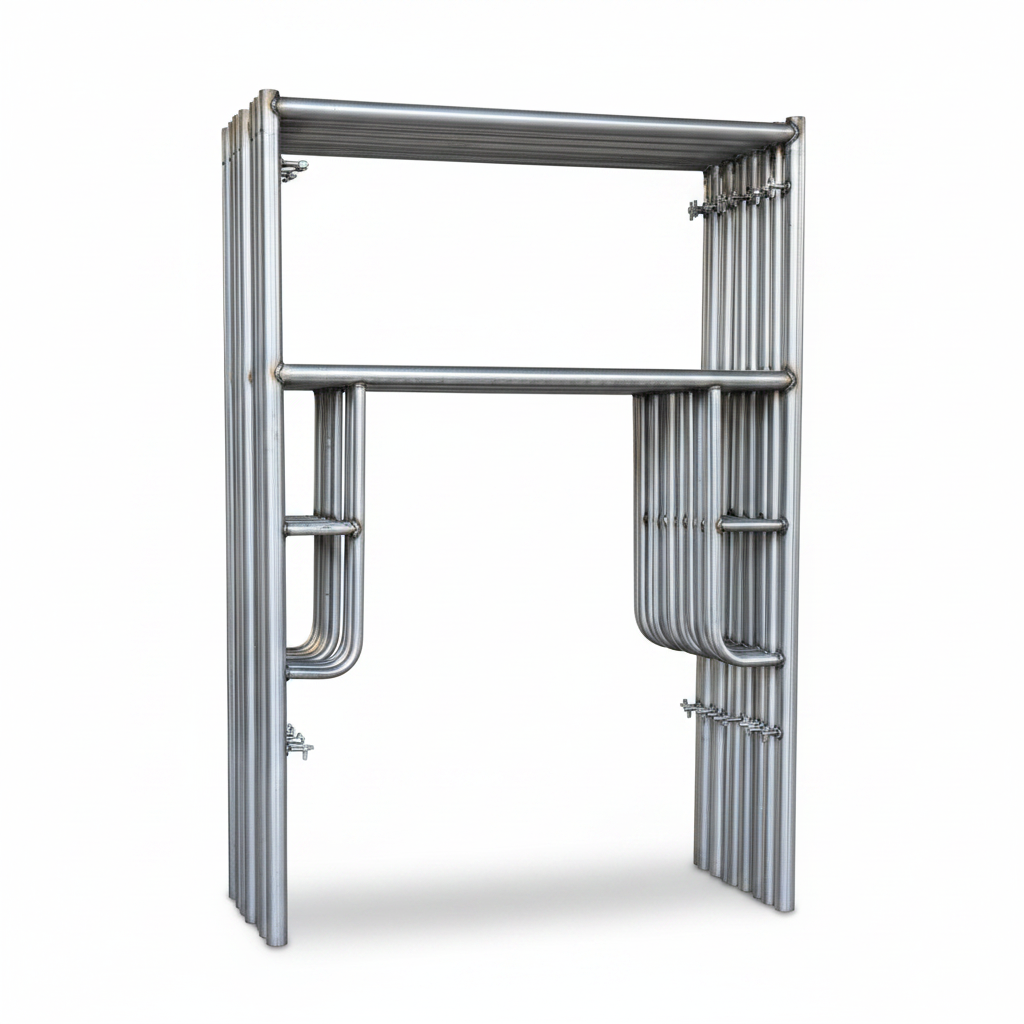
Masonry Support Is Different From General Access Scaffolding
A scaffolding system used for heavy masonry support carries loads that are fundamentally different from a typical access scaffold used for painting or light electrical work. The difference isn't just about total weight—it's about the type of loading, the distribution of forces, and the duration over which those forces are applied.
Masonry support scaffolds have to hold stacks of bricks or blocks, pallets of mortar, and the workers placing them. The loads are concentrated, often unevenly distributed, and they persist for days or weeks as the masonry work progresses. A scaffold that's perfectly adequate for a crew doing drywall finishing can be dangerously inadequate for the same crew laying concrete block.
The European standard EN 12811-1 defines six service load classes for working scaffolds. These classes specify the uniformly distributed load and the concentrated load that the scaffold must withstand. For heavy masonry support, the relevant classes typically start at Class 3 and go up to Class 6, depending on the specific materials and methods being used.
The Six Load Classes Under EN 12811-1
EN 12811-1 is the European standard that sets performance requirements and methods of structural design for access and working scaffolds. It replaced older national standards like the UK's BS 5973, introducing a more rigorous design-based approach.
The six load classes are defined as follows:
| Load Class | Uniformly Distributed Load (kN/m²) | Concentrated Load (kN) | Typical Applications |
|---|---|---|---|
| Class 1 | 0.75 | 0.5 | Inspection, light access |
| Class 2 | 1.5 | 1.0 | Painting, plastering, light maintenance |
| Class 3 | 2.0 | 1.5 | General construction, light material storage |
| Class 4 | 3.0 | 2.0 | Brickwork, blockwork, medium masonry |
| Class 5 | 4.5 | 3.0 | Heavy masonry, stone cladding |
| Class 6 | 6.0 | 3.0 | Very heavy masonry, precast concrete elements |
Class 1 and Class 2 scaffolds are for work that does not require the storing of construction materials and components. Class 3 is the minimum for general construction where some material storage occurs on the platform. Class 4 through Class 6 are where heavy masonry support lives.
What Class 4, 5, and 6 Actually Mean on Site
A Class 4 scaffold (3.0 kN/m² uniform load, 2.0 kN concentrated load) is rated for brickwork and blockwork where the materials are staged on the platform in moderate quantities. A typical brick pallet weighs about 1.5 to 2.0 tonnes, but that load is distributed across the platform area. The concentrated load rating matters more for the localized pressure from a stack of blocks or the point load from a mortar tub.
Class 5 (4.5 kN/m², 3.0 kN concentrated) steps up the capacity for heavier masonry—stone cladding, large-format concrete blocks, or situations where multiple pallets are staged on the same platform. The difference between Class 4 and Class 5 might not seem huge on paper, but on site it's the difference between a scaffold that feels solid underfoot and one that creaks and deflects when the forklift sets down a pallet.
Class 6 (6.0 kN/m², 3.0 kN concentrated) is the heavy-duty tier. This is what gets specified for precast concrete panel installation, massive stone masonry, or any situation where the scaffold is effectively supporting a small materials warehouse at height. The structural demands at this level require larger-diameter standards, closer bay spacing, and more robust bracing.
The "Partial Area Load" Provision That Changes Everything
One of the less obvious but critically important provisions in EN 12811-1 is the partial area load allowance. The standard recognizes that loads aren't always uniformly distributed across the entire platform. A pallet of bricks sitting in one corner creates a concentrated load that's higher than the average uniform load would suggest.
The standard allows for this by specifying both uniform and concentrated load requirements. But the real-world implication is that a scaffold rated for Class 4 uniform loading might still fail if the concentrated load from a single pallet exceeds the Class 4 concentrated rating. This is why specifiers need to look at both numbers, not just the class designation.
A site in the Middle East learned this lesson during a stone-cladding project on a high-rise tower. The scaffold was specified as Class 4 based on the uniform load calculations. But the stone panels were delivered in crates that each weighed nearly 1.5 tonnes, and the crane set them down on the platform at specific locations dictated by the hoist access. The concentrated loads at those points exceeded the Class 4 rating. The scaffold held—barely—but the deflection was visible, and the site engineer ordered an immediate upgrade to Class 5 for the remaining lifts. The change added cost and delayed the schedule, all because the partial area load provision hadn't been properly accounted for.
Beyond Load Class: Bay Spacing, Standard Diameter, and Bracing
Load class alone doesn't tell the whole story. The actual capacity of a scaffolding system depends on bay spacing, standard diameter, bracing configuration, and the connections between components.
For heavy masonry support, bay spacing typically needs to be reduced. A standard 3.0-meter bay that works fine for Class 3 might need to be shortened to 2.0 or 2.5 meters for Class 5 or Class 6. The vertical standards also need to be larger diameter—60.3 mm OD rather than 48.3 mm—to handle the higher axial loads.
The bracing configuration matters just as much. Heavy loads create lateral forces, especially when the scaffold is subjected to wind or when materials are being moved on and off the platform. Diagonal bracing in multiple planes becomes non-negotiable at Class 5 and above.
The connection design is the critical enabler. A rosette-based system like ringlock distributes loads more evenly across the structure because each rosette accepts connections in multiple directions. This multi-directional load path means the scaffold can handle higher loads with less material than a system that only connects in four directions.
What Happens When You Get the Load Class Wrong
Under-specifying a scaffold's load class for masonry support creates risks that go beyond the obvious structural failure. The more common problem is excessive deflection—the platform sags under load, causing mortar joints to misalign, finished stone to crack, or workers to lose their footing. Deflection that's within elastic limits might not cause a collapse, but it can ruin the masonry work and force expensive rework.
Over-specifying, on the other hand, wastes money on material that isn't needed. A Class 6 scaffold costs more to rent, takes longer to erect, and requires more crane time to position the heavier components. The challenge for the specifier is to match the load class to the actual site conditions without guessing too high or too low.
The EN 12811-1 framework provides the technical basis for making that match. But the standard only works if the specifier accurately estimates the actual loads—not just the weight of the materials, but the dynamic loads from moving them, the concentrated loads from storage, and the duration of those loads. A scaffold that's adequate for a single day of light block work might be inadequate for a week of heavy stone cladding, even if the load class rating is the same, because the cumulative effect of repeated loading cycles can cause connections to loosen over time.
Manufacturers like STL Sun that produce scaffolding systems with consistent rosette spacing, uniform wedge dimensions, and certified material grades give specifiers the confidence that the rated load class reflects actual on-site performance. The standard sets the minimum; the manufacturing quality determines whether that minimum is reliably achieved shift after shift, day after day.
Table of Contents
- Masonry Support Is Different From General Access Scaffolding
- The Six Load Classes Under EN 12811-1
- What Class 4, 5, and 6 Actually Mean on Site
- The "Partial Area Load" Provision That Changes Everything
- Beyond Load Class: Bay Spacing, Standard Diameter, and Bracing
- What Happens When You Get the Load Class Wrong