 ×
×


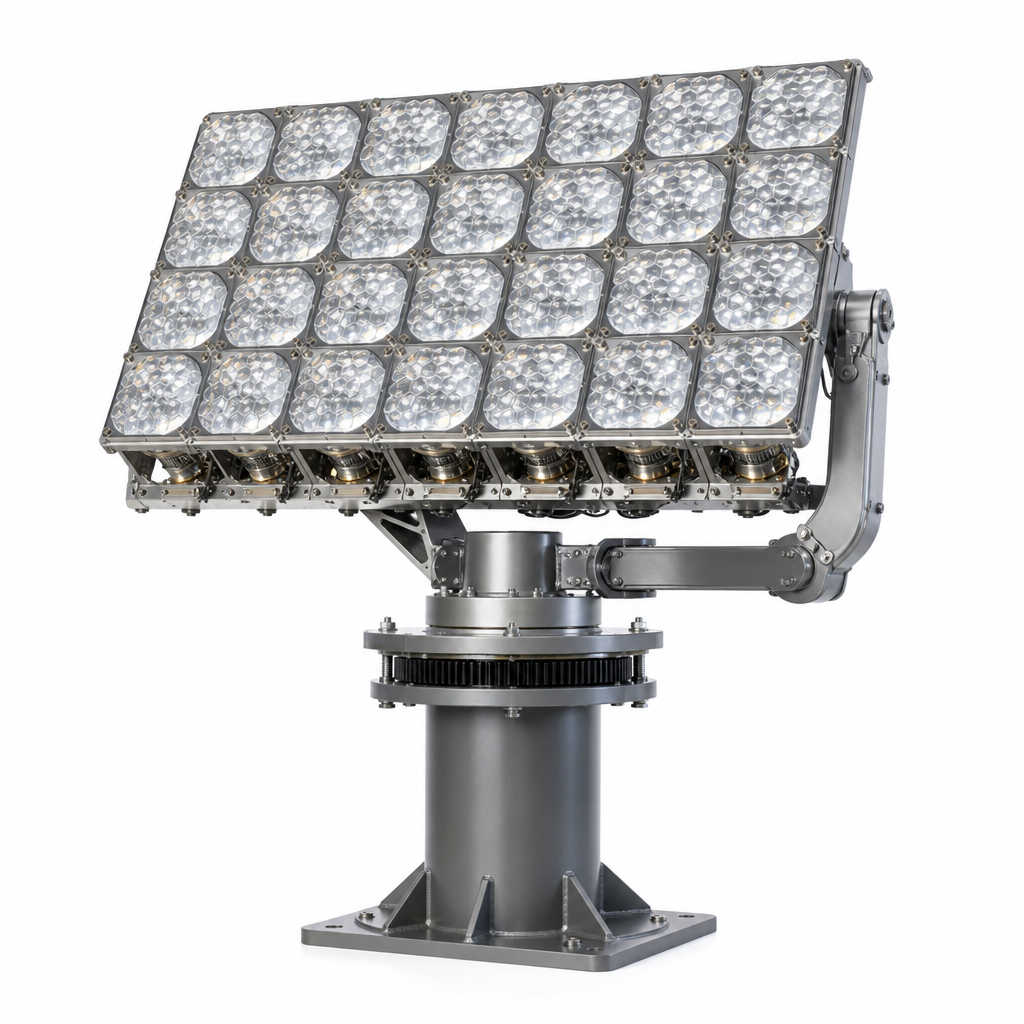
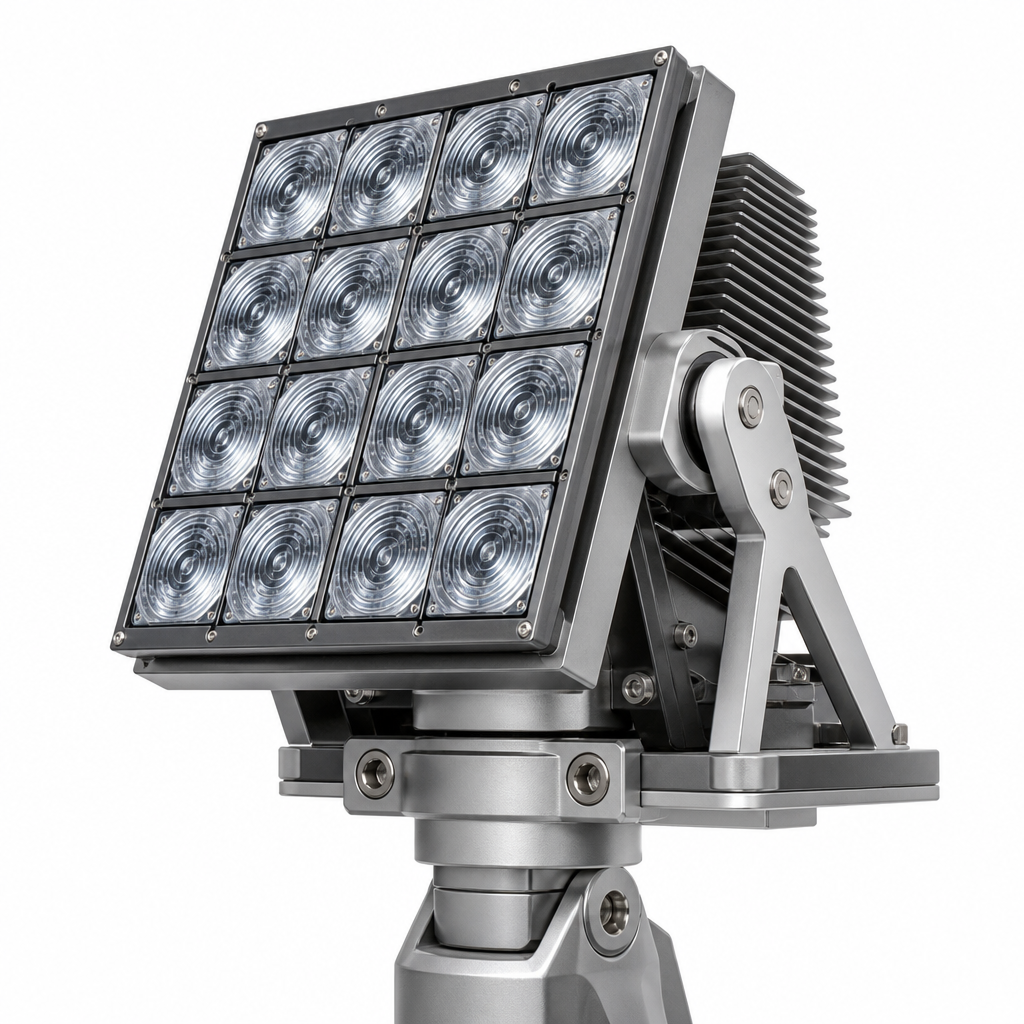
Full-Spectrum Dual-Axis Tracking System | 360° Azimuth × 90° Elevation for Concentrated PV and High-DNI Maximum-Yield Applications
Concentrated Photovoltaic (CPV) systems and high-DNI solar installations demand tracking precision that single-axis systems cannot deliver. A CPV module with 500× concentration ratio must maintain optical alignment within ±0.5° of the sun's vector — a 1° misalignment reduces output by 30% or more. Standard single-axis trackers operating at ±0.5° azimuth accuracy, with no elevation tracking, cannot serve this application.
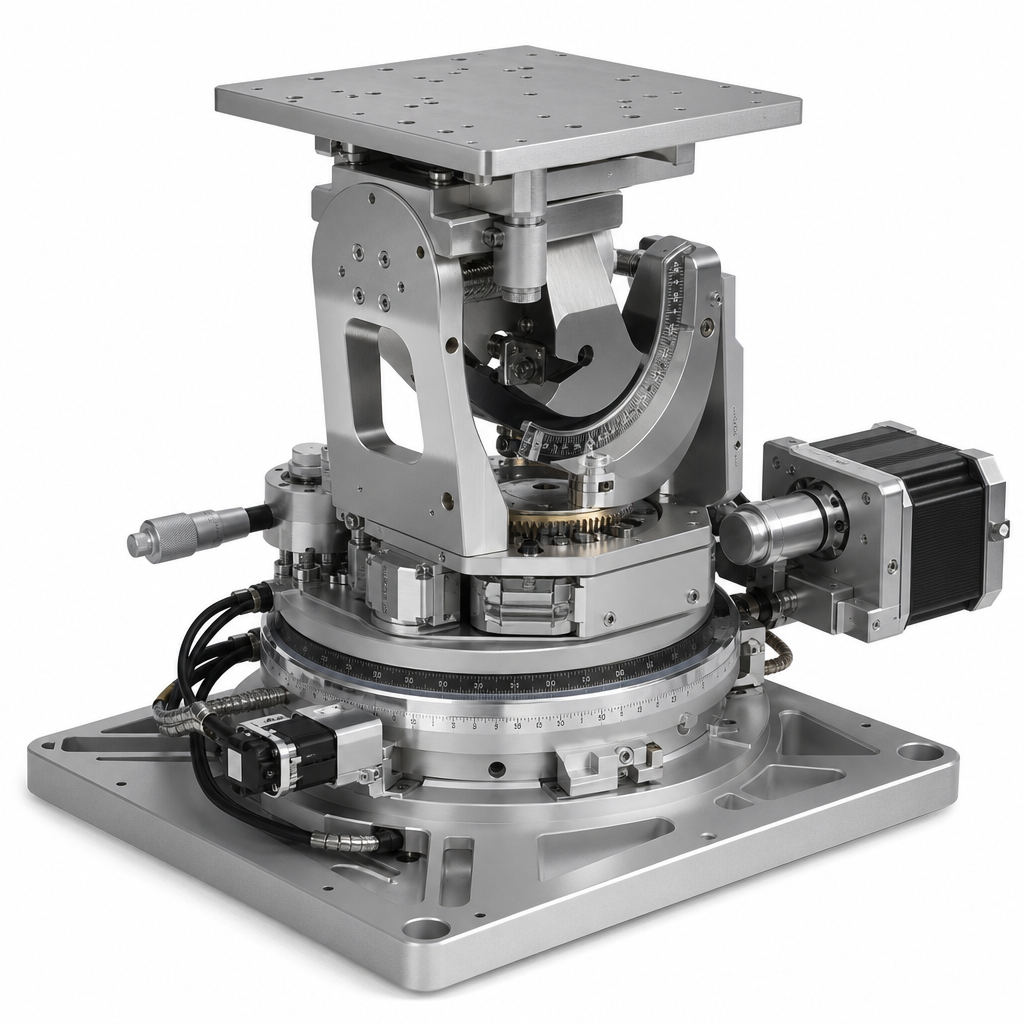
The Full-Spectrum Dual-Axis Tracking System provides 360° azimuth rotation and 90° elevation range using dual slew-drive actuators with closed-loop optical encoder feedback. This is not a general-purpose tracker adapted to CPV — it is a CPV-native platform designed from the ground up for high-concentration optics, high-DNI desert sites, and applications where every fraction of a degree in tracking error is revenue lost.
Key engineering specifications:
Dual slew-drive architecture: Independent azimuth and elevation drives eliminate the mechanical coupling and backlash found in single-motor linkage designs. Each axis has its own motor, gearbox, and encoder
±0.5° tracking accuracy with auto-calibration: The controller performs a daily sun-sensor calibration at solar noon, correcting for any mechanical drift, foundation settlement, or encoder offset accumulated since the previous calibration
Astronomical algorithm + optical fine-tuning: The primary tracking path uses GPS-referenced astronomical calculation; a secondary optical sun sensor provides real-time correction for atmospheric refraction near the horizon, which can shift the apparent sun position by up to 0.6° at low elevation angles
50 m/s survival wind speed in stow position: All rows rotate to a 0° elevation (horizontal), 0° azimuth (south-facing) stow configuration that presents minimum cross-section to wind
Parameter |
Specification |
Tracking Type |
Full Dual-Axis (Azimuth + Elevation) |
Azimuth Range |
0°–360° (continuous rotation capable) |
Elevation Range |
0°–90° (horizontal to zenith) |
Tracking Accuracy |
±0.5° (azimuth), ±0.5° (elevation) |
Tracking Method |
Astronomical algorithm + GPS + optical sun sensor feedback |
Drive Type |
Dual slew drive (independent azimuth + elevation) |
Module Capacity |
4–24 modules per tracker unit (CPV-optimized) |
Operating Wind Speed |
Up to 20 m/s |
Survival Wind Speed |
50 m/s (stow position: 0° elevation, 0° azimuth) |
Stow Mechanism |
Automatic at 20 m/s wind + manual command |
Control Communication |
Modbus TCP/IP; RS-485 daisy-chain per row |
Primary Material |
Q355B HDG steel structure + stainless steel fasteners |
Structure Warranty |
20 years |
Drive Warranty |
5 years |
CPV (Concentrated Photovoltaic) power plants using multi-junction cells
High-DNI desert research and demonstration projects
Solar thermal collector tracking (parabolic trough, Fresnel)
Maximum-yield PV installations in premium-PPA markets
Solar resource measurement stations requiring direct-normal tracking
Most dual-axis trackers use a single motor with a linkage mechanism connecting azimuth and elevation axes — cheaper to manufacture, but with inherent backlash and coupling that limits accuracy to ±1.0–1.5°. Our dual-drive architecture gives each axis its own independent slew drive with a worm-gear reduction that provides near-zero backlash and self-locking capability (the worm gear cannot be back-driven by wind load). This is critical for CPV where a 0.5° tracking error directly reduces optical concentration efficiency.
Step |
Activity |
1 |
Concrete foundation pour with embedded anchor bolts |
2 |
Azimuth drive and pedestal installation |
3 |
Elevation drive and torque tube assembly |
4 |
Module mounting frame installation |
5 |
Controller and sun sensor installation |
6 |
Calibration: sun-sensor alignment at solar noon; full tracking test cycle |
Q. What is the cost difference vs single-axis tracking?
Dual-axis tracking adds approximately \$0.08–0.15/Wdc over single-axis for the tracker hardware, plus typically more expensive concrete foundations. The economic case is strongest for CPV (where dual-axis is required, not optional) and for high-DNI sites where the additional 15–20% yield gain over single-axis justifies the premium.
Q. How often does the system require recalibration?
The daily auto-calibration routine at solar noon corrects minor drift. Manual recalibration by a technician is recommended annually during preventive maintenance or after any significant foundation settlement event.
# |
Section |
Recommendation |
Format |
1 |
Hero |
CPV array with dual-axis trackers at midday tracking position |
1920×750px |
2 |
Drive detail |
Close-up: dual slew-drive assembly with labels |
800×600px |
3 |
Tracking diagram |
3D illustration: azimuth + elevation rotation axes |
800×600px |
4 |
Sun sensor |
Optical sun sensor mounted on tracker frame |
600×400px |
Primary: dual axis solar tracker CPV, two axis PV tracking system, full spectrum solar tracker, 360 degree azimuth solar tracker
Secondary: concentrated PV tracking system, high accuracy solar tracker ±0.5 degree, dual slew drive tracker, CPV mounting system

 EN
EN