Ballast Mount Solar Systems | Wind-Resistant, No-Drill Rooftop Solutions

Get a Free Quote

Our representative will contact you soon.
Email
Mobile/WhatsApp
Name
Company Name
Message
0/1000

Ballast Mount Solar Mounting Systems – Durable, Cost-Effective Solutions from STEEL

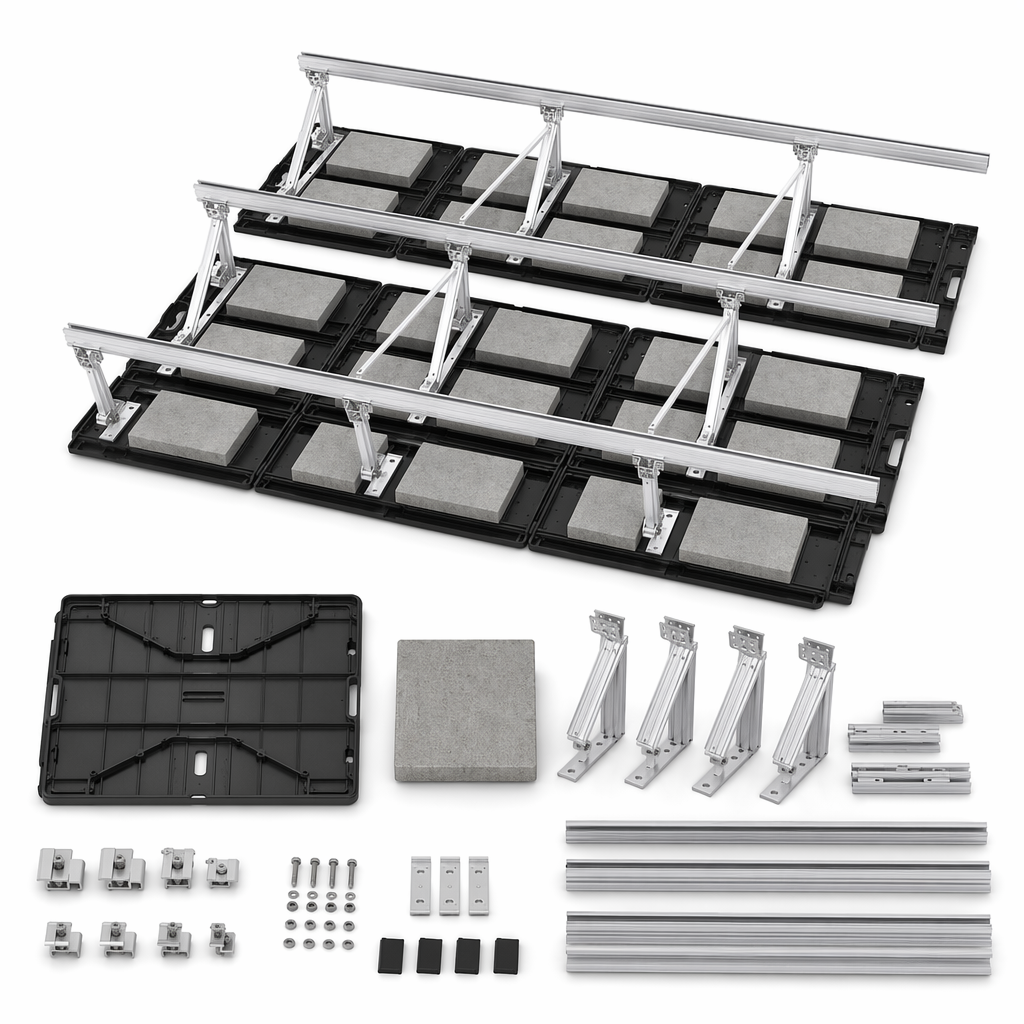
Ballast mount solar mounting systems are an innovative and practical solution for solar installations on flat rooftops and ground-mounted sites where drilling is not feasible or permitted. STEEL, a professional manufacturer with over 15 years of experience in the solar mounting industry, offers a comprehensive range of ballast mount solar systems designed for durability, stability, and ease of installation. Our systems are engineered to withstand high wind loads and seismic activity, thanks to robust steel construction and precise engineering. We provide customized solutions to meet specific project requirements, including various module sizes, tilt angles, and ballast configurations. With an annual production capacity of 800,000 units and exports to more than 50 countries, STEEL ensures reliable supply and on-time delivery for projects of any scale. Our ballast mount solar systems are ideal for commercial rooftops, industrial facilities, carports, and temporary solar installations.
Get A Quote

Case Study

Superior Wind Resistance and Structural Stability

Our ballast mount solar systems are meticulously engineered to provide exceptional wind resistance, ensuring stable performance even in extreme weather conditions. Using high-grade galvanized steel and a precise structural design, our systems can withstand wind speeds up to 60 m/s. The ballast blocks are strategically placed to distribute weight evenly, preventing uplift and maintaining the integrity of the entire installation. We perform rigorous wind tunnel tests and finite element analysis to validate our designs, ensuring that each system meets or exceeds international standards. This dedication to structural stability not only enhances the safety of the installation but also maximizes the return on investment for our clients by reducing maintenance costs and prolonging system lifespan. Our engineering team works closely with clients to customize ballast configurations based on local climate data, ensuring optimal performance in any location.

Fast and Simple Installation, No Roof Penetration

One of the key advantages of our ballast mount solar system is the ability to avoid roof penetration, preserving the integrity of waterproofing membranes and reducing installation time dramatically. Our systems feature pre-assembled components and a modular design that allows for quick and easy assembly at the site. With clear installation manuals and optional on-site technical support, even a standard crew can install our system in a fraction of the time required for traditional mounted systems. The use of ballast blocks eliminates the need for drilling, which also makes the system ideal for buildings with strict structural constraints or heritage roofs. Our customers report up to 50% reduction in installation labor costs compared to conventional methods. Furthermore, the system can be easily dismantled and relocated, offering flexibility for temporary setups or future expansions.

Versatility and Customization for Any Project

STEEL understands that every solar project has unique requirements. That's why our ballast mount solar systems are available in a variety of configurations to suit different module types, tilt angles, and mounting surfaces. Whether you need a low-profile system for a commercial rooftop or a higher tilt angle to maximize energy yield in high-latitude regions, we can customize the design to meet your precise specifications. Our manufacturing capabilities allow for custom frame lengths, widths, and ballast tray designs, ensuring perfect compatibility. We also offer different surface finishes, including hot-dip galvanized and ZAM, to provide superior corrosion resistance in coastal or industrial environments. With our OEM services, clients can have their logo and branding on components, making us a true extension of your business.

Related products

Ballast mount solar systems have become increasingly popular in the solar industry due to their many advantages, especially for flat-roof installations. They are a non-penetrating solution that uses concrete blocks to hold the solar panels in place, eliminating the need for roof anchors and reducing the risk of leaks. This makes them an ideal choice for commercial buildings, warehouses, and industrial facilities where roof integrity is crucial. Additionally, they offer design flexibility, allowing for various tilt angles and orientations to maximize sunlight exposure and energy generation. The installation process is straightforward and faster than traditional methods, saving both time and labor costs. Furthermore, ballast mount systems are easily removed or relocated, making them perfect for temporary installations or projects where the solar array may need to be moved in the future. Choosing STEEL for your ballast mount solar project ensures you get a system engineered for durability, with a coating and materials designed to withstand corrosion and last for decades. Our team provides comprehensive support from design to delivery, ensuring your investment yields tangible returns.

Frequently Asked Questions

How does a ballast mount solar system work?

A ballast mount solar system uses concrete blocks or other heavy materials to provide weight and stability for solar panels, without the need to penetrate the roof surface. The panels are mounted on a racking system that is securely attached to heavy ballast blocks. The weight of the ballast must be carefully calculated to counteract wind uplift forces, ensuring the system remains stationary in strong winds. Our systems are designed to achieve this balance precisely, providing peace of mind for system owners.
The main advantages include: no roof penetration (protects waterproofing), faster installation, easier relocation, and lower labor costs. It is also well-suited for flat roofs and can be installed without damaging roofing materials, which is particularly valuable for leased buildings where modifications are limited. Moreover, ballast systems offer design flexibility, allowing for easy adaption to different building structures and local weather conditions.
While ballast mount systems are versatile, there are considerations. The roof must be able to support the additional weight of the ballast. We conduct a thorough structural assessment to determine the required ballast based on building load capacity, wind zone, and panel layout. Our engineers provide recommendations appropriate for your roof type. It's essential to consult with a structural engineer before installation to ensure safety.
Wind uplift is the primary force that ballast must counteract. Our engineering team uses wind tunnel data and computational fluid dynamics to calculate the necessary ballast for maximum wind speeds at your site. By optimizing the system geometry and ballast distribution, we ensure that the panels remain stable and secure, even in hurricane-prone regions. We provide wind load calculations based on international standards.
Ballast mount systems require minimal maintenance. Regular inspection of the mounting hardware and ballast blocks ensures that all components are in good condition. The system's low profile does not obstruct roof access, making maintenance tasks easier. Additionally, the absence of roof penetrations reduces the risk of leaks, saving on potential repair costs. We recommend periodic checks after extreme weather events.

Related article

Why is ringlock scaffolding faster to erect than traditional frame scaffolding for high-rise jobs?

28

Jul

Why is ringlock scaffolding faster to erect than traditional frame scaffolding for high-rise jobs?

The High-Rise Bottleneck That Frame Scaffolding Can't Solve On a typical high-rise residential project in Southeast Asia a few years back, the site team had three weeks to get the facade scaffolding up before the curtain wall installers showed up. Th...
View More
What load classes must a scaffolding system meet for heavy masonry support?

01

Aug

What load classes must a scaffolding system meet for heavy masonry support?

Masonry Support Is Different From General Access Scaffolding A scaffolding system used for heavy masonry support carries loads that are fundamentally different from a typical access scaffold used for painting or light electrical work. The difference ...
View More
What are the differences between walk-through and climb-through frame scaffolding designs?

21

Aug

What are the differences between walk-through and climb-through frame scaffolding designs?

The Name Tells Part of the Story, but Not All of It Walk-through and climb-through frame scaffolding sound like they might be the same thing with different names. They're not. The distinction matters on site—for safety, for productivity, and fo...
View More
How to assemble a ringlock scaffolding tower using the rosette connection method?

27

Aug

How to assemble a ringlock scaffolding tower using the rosette connection method?

The Rosette Is the Heart of the System Ringlock scaffolding gets its name from the ring-shaped connection node—the rosette—that sits at the heart of every joint. Understanding how this connection works is the key to assembling a tower tha...
View More

Customer Reviews

John Martinez

We chose STEEL's ballast mount solar system for a large rooftop installation. The system was easy to install and saved us significant time and money. The engineering support was excellent. The system has been operational for over a year and has performed flawlessly even during a windy season. Highly recommended!

Maria Schmidt

STEEL provided a custom ballast mount solution that perfectly met our requirements for a challenging rooftop with limited load capacity. Their team worked closely with our engineers to provide the optimal ballast configuration. The product quality is outstanding, and the installation process was streamlined. We are impressed by their professionalism and look forward to future collaborations.

Get a Free Quote

Our representative will contact you soon.
Email
Mobile/WhatsApp
Name
Company Name
Message
0/1000
Exceptional Durability with Advanced Coating Technology

Exceptional Durability with Advanced Coating Technology

Our ballast mount solar systems are manufactured using hot-dip galvanized steel, which provides superior corrosion resistance, particularly in coastal and high-humidity environments. This extends the lifespan of the system to match that of the solar panels (over 25 years). The steel we use is from certified mills, and our production process adheres to strict quality standards, resulting in a product that withstands the test of time. This durability ensures long-term performance and minimal maintenance, reducing the total cost of ownership for our clients.
Engineering Excellence with Customized Solutions

Engineering Excellence with Customized Solutions

We pride ourselves on our engineering expertise. Our in-house structural engineers use advanced simulation software to design ballast mount systems that are both strong and optimize material usage, reducing costs without compromising performance. We offer complete customization, including specific dimensions, ballast types, and surface finishes, to meet unique project requirements. With over 15 years of experience, we have faced and solved a wide array of challenges, making us a trusted partner for complex installations.
Proven Global Track Record and Reliable Supply

Proven Global Track Record and Reliable Supply

With more than 50 countries served and 80+ trusted partners, STEEL has a proven track record of delivering high-quality solar mounting systems on time, every time. Our large-scale manufacturing capacity and robust supply chain ensure we can handle projects of any size, from small residential rooftops to massive utility-scale solar farms. Our global presence means we understand international codes and standards, and we can provide documentation and certifications required in your region. This reliability is crucial for project developers and EPC contractors who need predictable delivery schedules.