 ×
×


At first glance, utility-scale solar mounting systems and heavy-duty highway guardrails belong to entirely different sectors of industrial infrastructure. One stabilizes clean energy assets in remote deserts, while the other protects commuter lives on bustling expressways. However, look beneath the surface, and these two structural heavyweights speak the exact same engineering language. Both rely on advanced metallurgy, heavy-duty anti-corrosion science, and precise structural mechanics to survive the world’s harshest environments.
Since 2025, the global infrastructure landscape has faced an unprecedented surge in extreme weather events. From blistering heatwaves and sandstorms in the Middle East to typhoons in Southeast Asia, the baseline for project survival has radically shifted. No longer is it enough for structural components to simply meet basic, day-one functions. Today, asset owners, EPC contractors, and municipal authorities demand full-lifecycle reliability that spans decades. Drawing on decades of hands-on structural engineering experience, STEEL has identified three tectonic technological shifts rewriting the rules for both industries, and the manufacturer has already executed massive product upgrades across its entire portfolio.
Trend 1: Advanced Corrosion Resistance – Moving from Single Coatings to Composite Armor
For decades, a standard 550 g/m² hot-dip galvanized coating was considered the industry benchmark for outdoor steel structures. It was a reliable, default choice. However, in today’s high-salinity coastal areas, chemical-heavy industrial zones, and aggressive saline-alkali soils, this traditional coating can no longer guarantee the mandatory 20+ year asset service life. In massive international bidding processes—particularly across the Middle East, South Asia, and Southeast Asia—specifications for heavy infrastructure have tightened dramatically. Project engineers are now pushing hot-dip galvanization demands to $\ge 850\text{ g/m}^2$, with some extreme coastal environments requiring an incredible $\ge 1100\text{ g/m}^2$. Alternatively, the market is quickly migrating toward innovative alloys like zinc-aluminum-magnesium coating technologies.
To address this critical market shift, STEEL has deployed a highly effective, dual-path structural protection system combining zinc-aluminum-magnesium coating tech with high-film-thickness anodizing.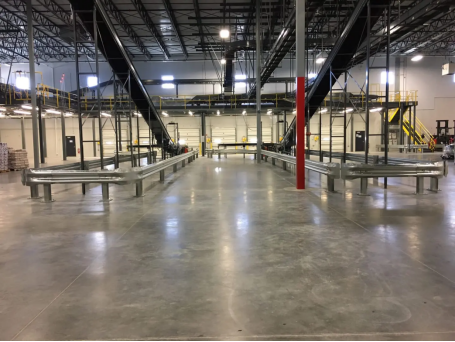
For the clean energy sector, STEEL supplies high-performance ZM-coated steel (comprising an optimized Zn-3.5%Mg-1.5%Al chemical matrix) with a targeted coating weight of 200–300 g/m² for its solar mounting systems. The magic of this alloy lies in its cut-edge self-healing capability; when the steel is cut or scratched during field installation, magnesium and aluminum form a dense, protective chemical film over the exposed steel edge, stopping rust before it can even start. Meanwhile, for the transportation safety sector, STEEL is actively promoting ultra-heavy highway guardrails treated with 850 g/m² or 1100 g/m² hot-dip galvanizing. To provide an impenetrable shield against acidic rainfall and industrial smog, STEEL offers an optional top-tier PVDF (Polyvinylidene Fluoride) outer coating, successfully achieving a proven salt spray resistance exceeding 3,000 hours in laboratory testing.
Trend 2: Engineering Validation – Shifting from Empirical Estimation to Advanced Digital Simulation
Gone are the days when structural engineers could rely on rule-of-thumb calculations and historical data to approve structural designs. As extreme wind gusts destroy poorly designed solar farms and high-speed vehicles test the limits of road barriers, empirical estimation is no longer acceptable to risk-averse project owners. Strict regulatory frameworks like the European EN 1317 standard and the United States MASH (Manual for Assessing Safety Hardware) criteria now mandate that all highway guardrails prove their worth through full-scale vehicle crash tests or highly accurate, validated finite element simulations. Similarly, in the utility-scale solar sector, international developers require highly detailed wind load analysis reports backed by Computational Fluid Dynamics (CFD).
Understanding that regulatory compliance is non-negotiable for modern procurement, STEEL has deeply integrated advanced engineering simulation into its core manufacturing and design workflow.
By partnering with top-tier, accredited third-party laboratories, STEEL provides specialized wind load analysis and structural calculations tailored exactly to local meteorological conditions, including regional basic wind pressures, localized microclimates, and specific terrain roughness categories. For road safety projects, STEEL removes the guesswork for international buyers by providing comprehensive LS-DYNA vehicle crash simulation reports and authentic, real-world crash test videos. This data-heavy documentation ensures that every tender submitted by STEEL's clients sails through strict technical bidding reviews without delay.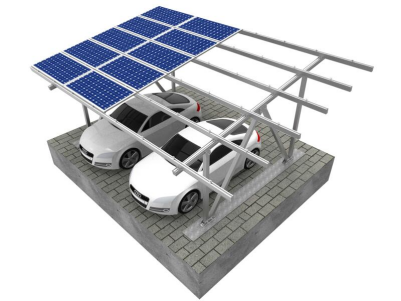
Trend 3: Functional Convergence – Seamless Multi-Energy Integration
The traditional boundaries dividing energy generation and public infrastructure are blurring rapidly. Today, structural elements are no longer passive assets; they are evolving into active energy nodes. The clearest real-world examples of this trend are BIPV solar carports (Building-Integrated Photovoltaics) and PV-integrated highway noise barriers. In the past, commercial carports served just two basic purposes: providing shade and shedding rain. Today, modern BIPV solar carports transform vast parking lots into decentralized power plants. By turning the carport roof itself into a solar array, businesses generate clean electricity that easily offsets the initial structural construction costs while powering localized EV charging infrastructure. A similar revolution is happening along sunny, noise-sensitive highway routes, where PV-integrated noise barriers combine essential acoustic insulation with continuous grid-tied green energy production.
To lead this high-growth sector, STEEL has designed and manufactured a specialized, completely proprietary waterproof rail system and integrated structural support posts engineered specifically for BIPV solar carports. This structural innovation ensures a perfectly seamless, leak-proof connection between the heavy structural steel framing and the delicate PV modules, completely eliminating the need for bulky, traditional secondary roofing materials. Furthermore, STEEL is aggressively targeting the next frontier of highway design: the PV guardrail concept, which mounts compact, ruggedized solar panels directly onto the upper structure of standard highway barriers. STEEL’s engineering team has already completed the baseline structural designs, load calculations, and conceptual blueprints for this emerging tech, giving forward-thinking developers an immediate edge in early-stage project planning.
Conclusion: Engineering Infrastructure That Stands the Test of Time
"The rapid evolution of industrial manufacturing technology will never slow down, but structural safety and long-term asset reliability will always remain the core priorities of global engineering," stated STEEL’s Technical Director during a recent product review. "By continuously investing in advanced anti-corrosion metallurgy, high-fidelity digital simulation, and multi-energy functional integration, STEEL ensures that our products do not just meet current international compliance standards—they anticipate the future needs of the global infrastructure market." As climate challenges grow, STEEL remains fully committed to supplying rugged, forward-compatible engineering components designed to protect investments and save lives worldwide.

 EN
EN